Based on the Official Alberta Driver's Guide
Alberta Road Signs & Their Meanings
Every sign, signal, and pavement marking you need to know for the Alberta knowledge test — with pictures, what to do, and test tips.
Quiz Yourself on Road SignsRegulatory Signs
Regulatory signs tell you what you must or must not do. They are legally enforceable — disobeying one can result in a fine and demerit points.
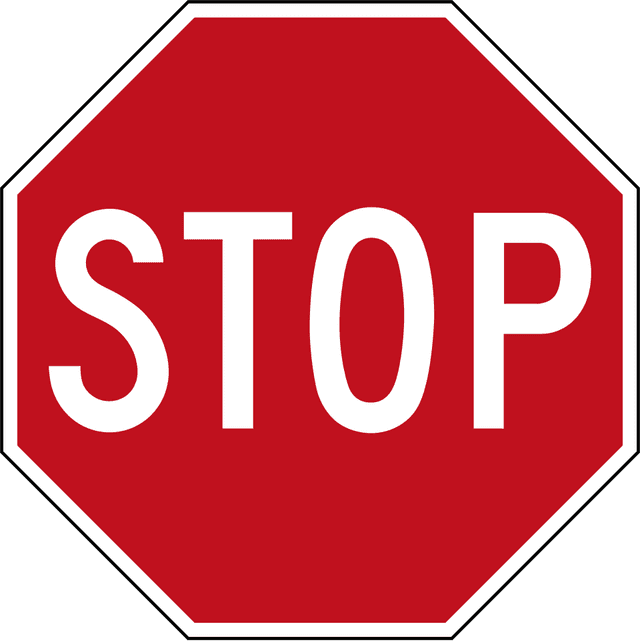
Stop Sign
The red octagon means you must come to a complete stop before the stop line, crosswalk, or intersection edge.
Learn this sign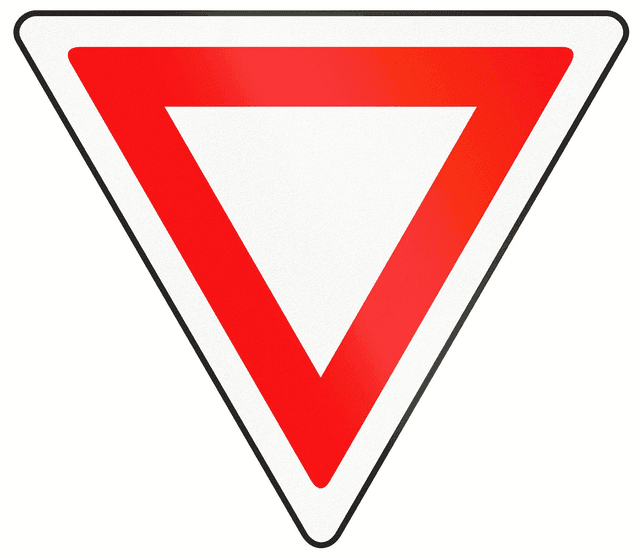
Yield Sign
The inverted red-and-white triangle means slow down and give the right-of-way to traffic and pedestrians.
Learn this sign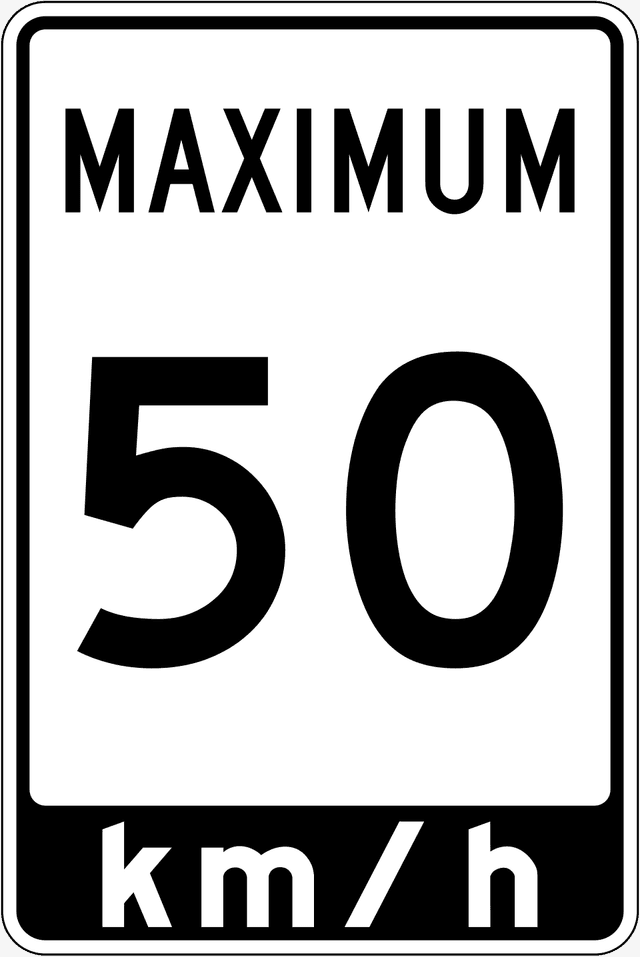
Maximum Speed Limit Sign
A white rectangular sign showing the maximum legal speed in km/h under ideal conditions.
Learn this sign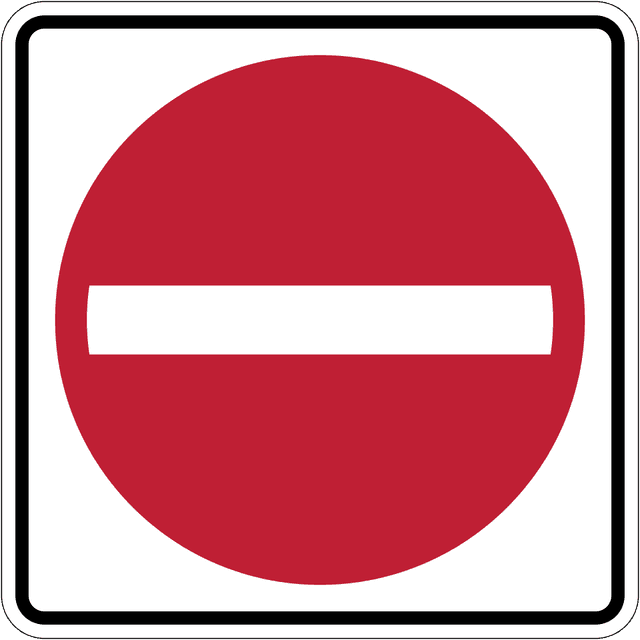
Do Not Enter Sign
A white horizontal bar inside a red circle means the road ahead is closed to traffic in your direction.
Learn this sign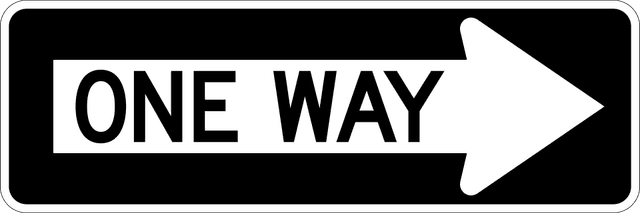
One Way Sign
A horizontal arrow indicating all traffic on the street must travel in the direction shown.
Learn this sign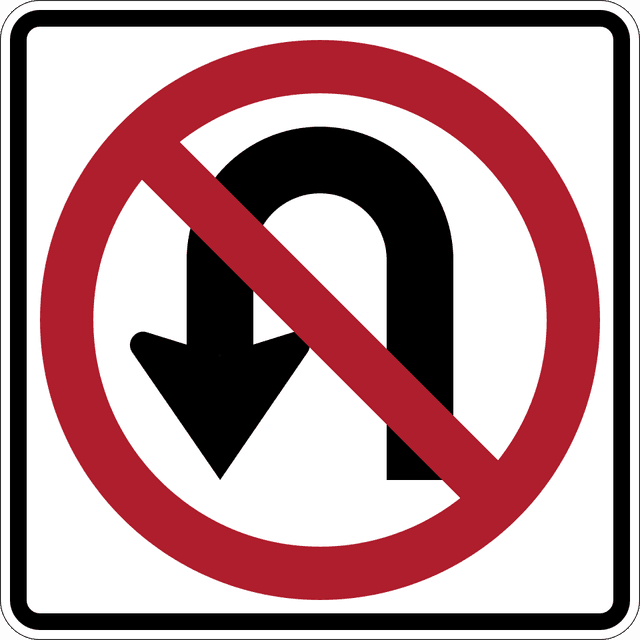
No U-Turn Sign
A U-shaped arrow with a red slash means U-turns are prohibited at this location.
Learn this sign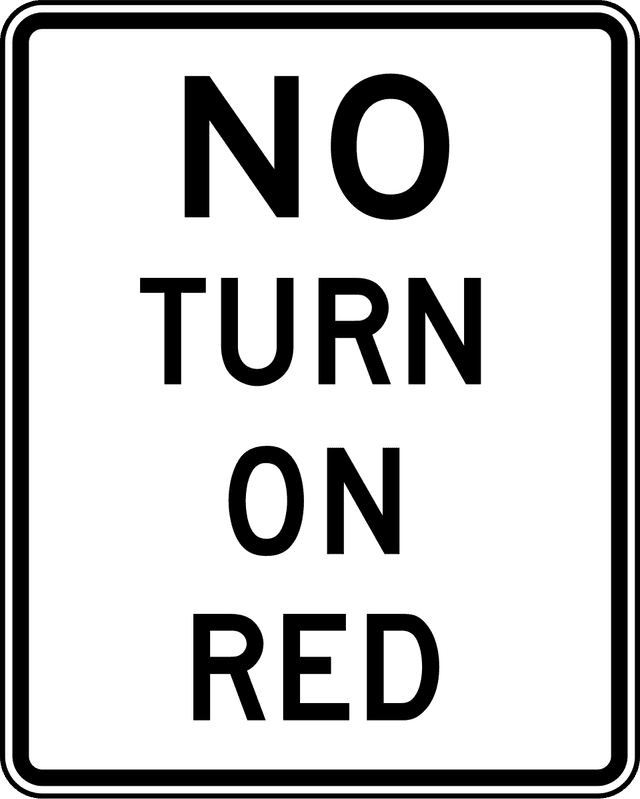
No Right Turn on Red Sign
This sign removes Alberta's default permission to turn right after stopping at a red light.
Learn this sign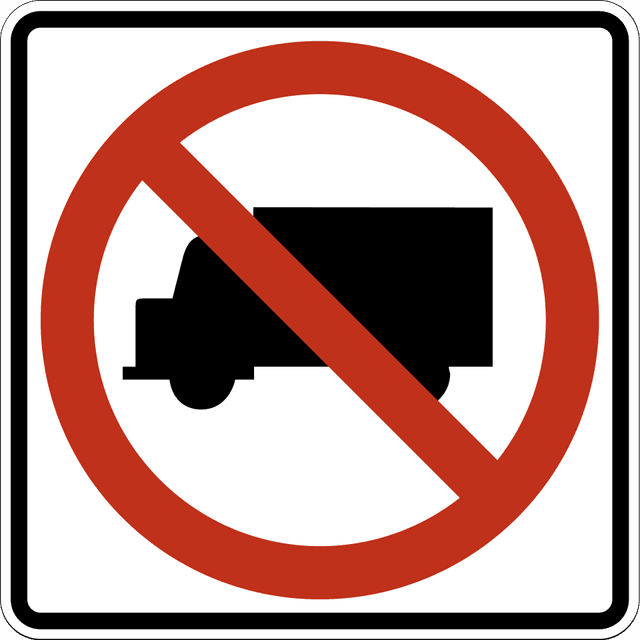
No Trucks Sign
A truck symbol with a red slash means commercial trucks are prohibited on this road.
Learn this sign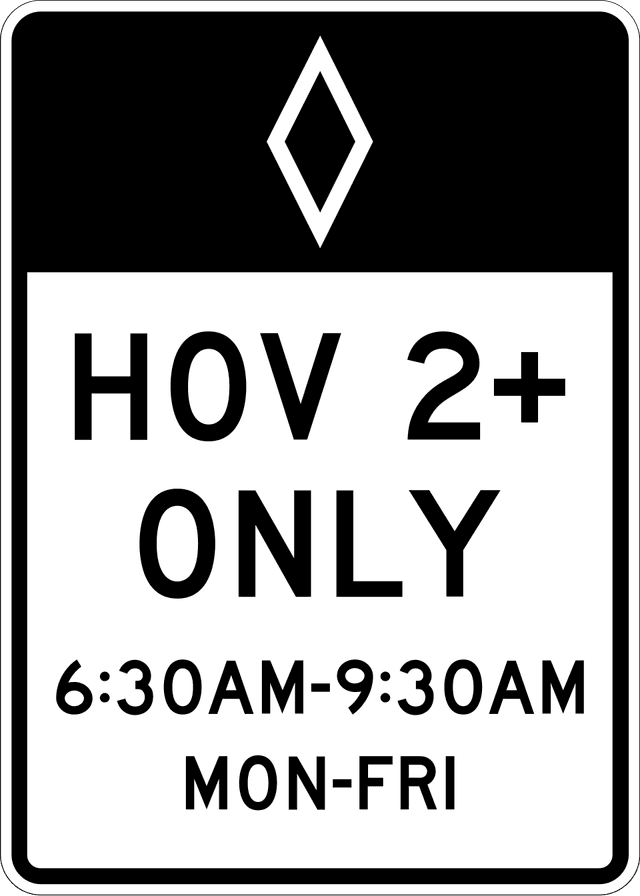
HOV Lane (Diamond) Sign
A white diamond marks a high-occupancy vehicle lane reserved for buses, carpools, and sometimes bikes.
Learn this sign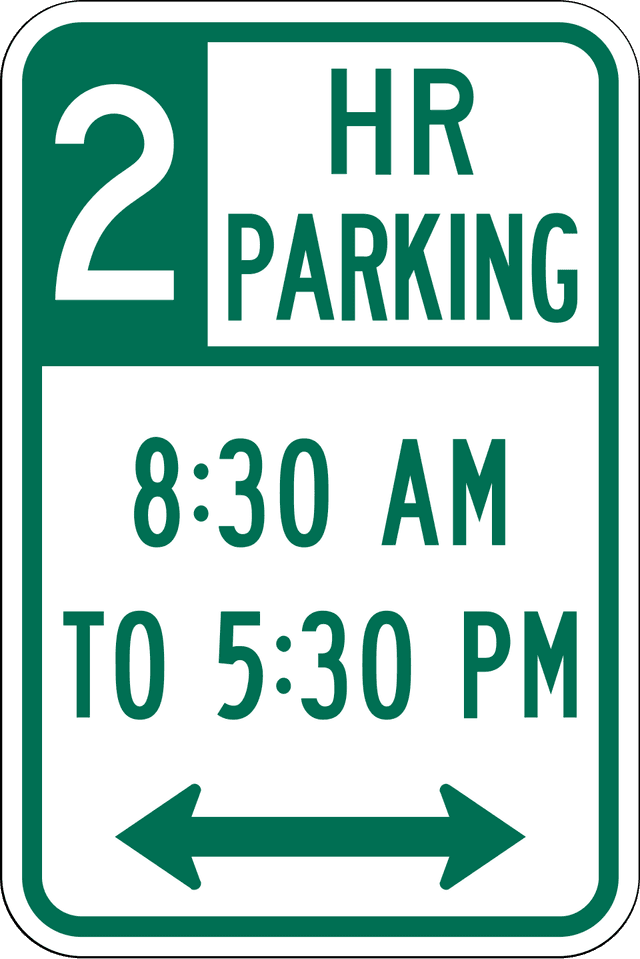
Time-Restricted Parking Sign
A green 'P' sign with times and days tells you when and how long you may park.
Learn this sign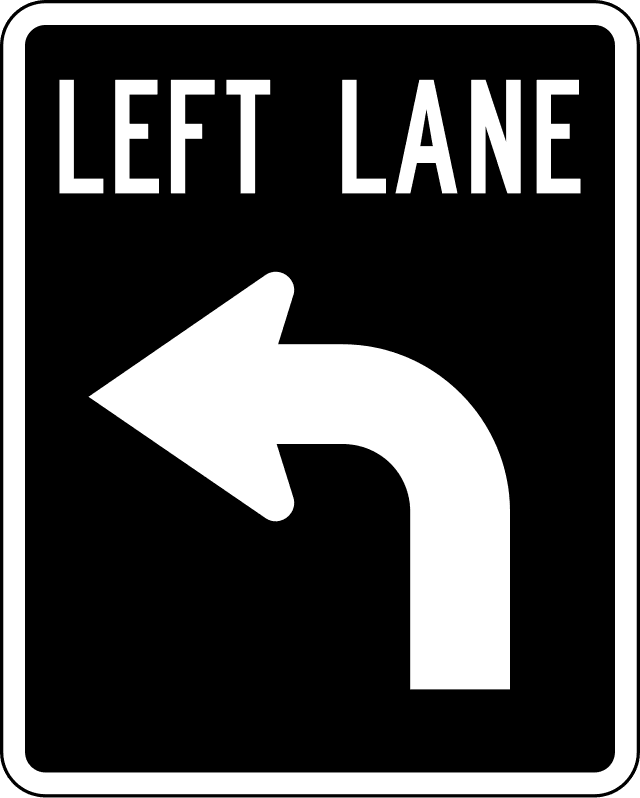
Lane Use Control Sign
Arrows over a lane tell you the only movements permitted from that lane at the intersection.
Learn this sign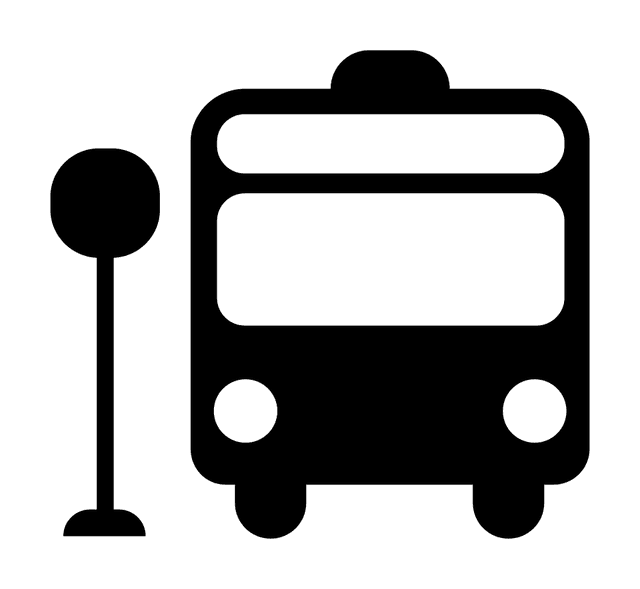
Bus Stop Zone Sign
Marks a curb area reserved for buses — stopping or parking your vehicle here is prohibited.
Learn this sign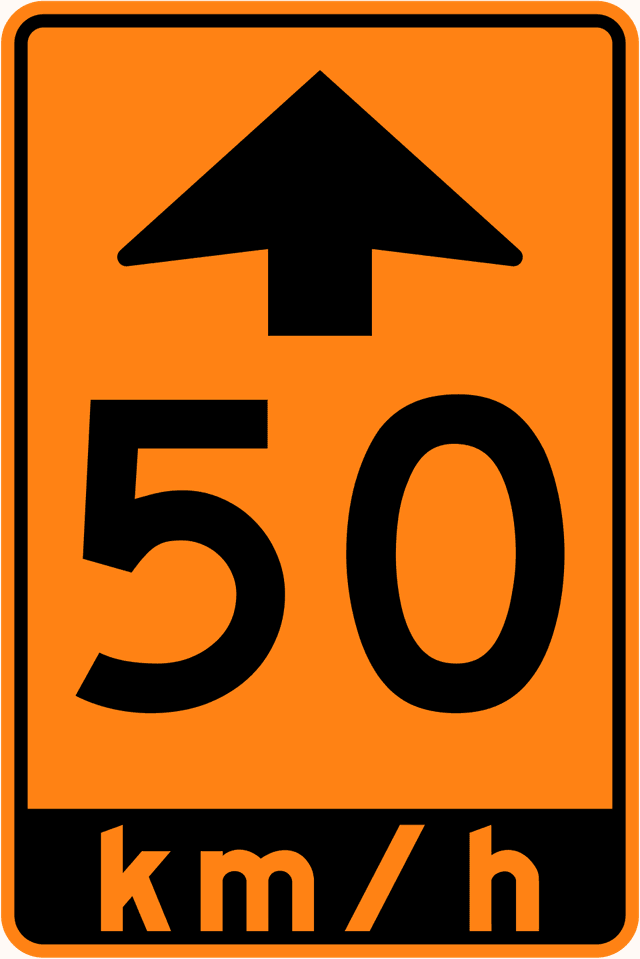
Taxi Stand Sign
Reserves curb space for licensed taxis waiting for fares — other vehicles may not stop or park there.
Learn this signWarning Signs
Warning signs are usually yellow diamonds. They alert you to hazards or changing road conditions ahead so you can slow down and prepare.
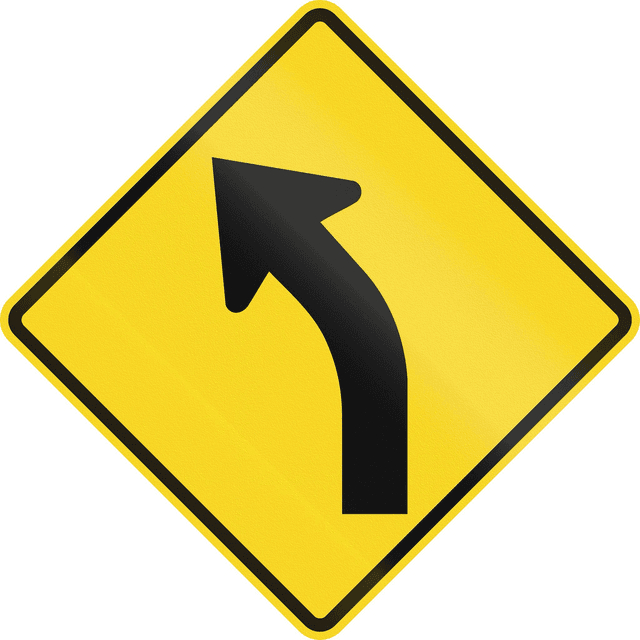
Curve Ahead Sign
A yellow diamond with a curved arrow warns that the road bends ahead — slow down before entering the curve.
Learn this sign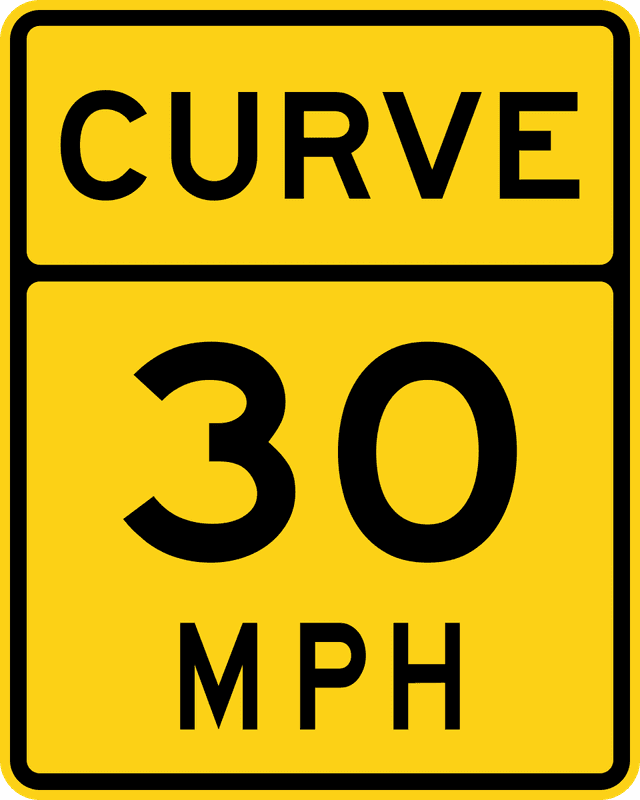
Curve Advisory Speed Tab
The small yellow speed tab under a curve sign shows the recommended safe speed for the curve in good conditions.
Learn this sign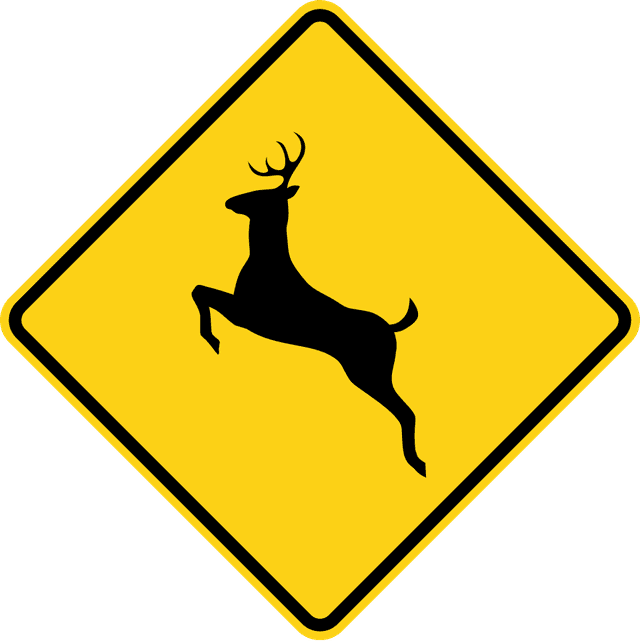
Deer Crossing Sign
A yellow diamond with a deer warns of wildlife frequently crossing the road in this area.
Learn this sign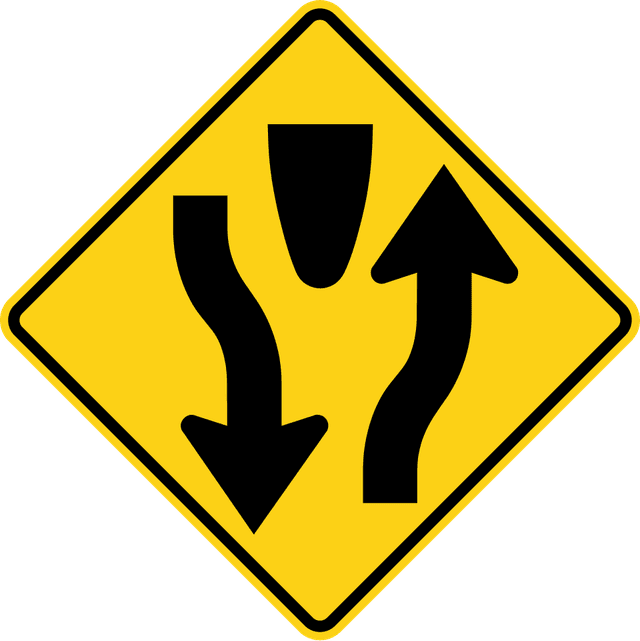
Divided Highway Begins Sign
Warns that the road ahead splits into separate roadways divided by a median — keep to the right side.
Learn this sign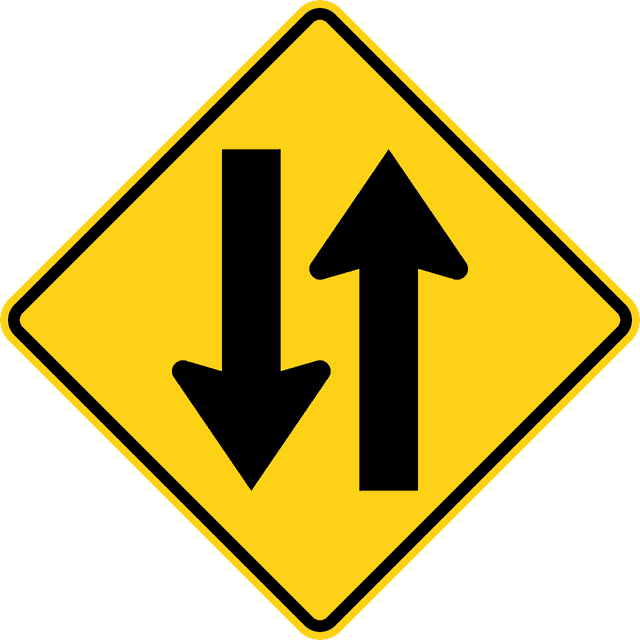
Two-Way Traffic Sign
Two opposing vertical arrows warn that you're leaving a one-way road and entering two-way traffic.
Learn this sign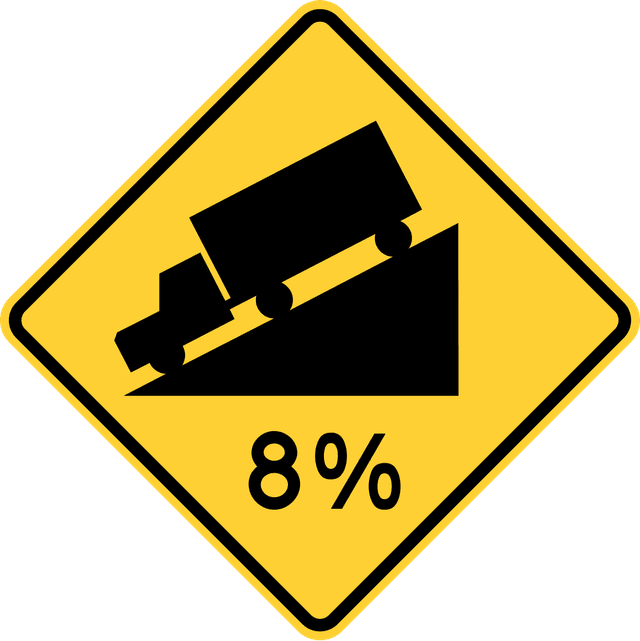
Steep Hill Sign
A truck on a downgrade warns of a steep descent ahead — shift to a lower gear before starting down.
Learn this sign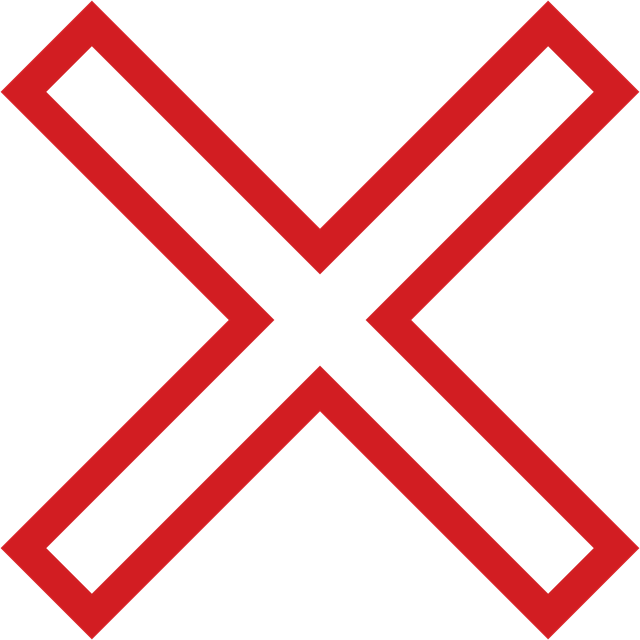
Railway Crossing Sign (Crossbuck)
The white X-shaped crossbuck marks the exact location where the road crosses railway tracks.
Learn this sign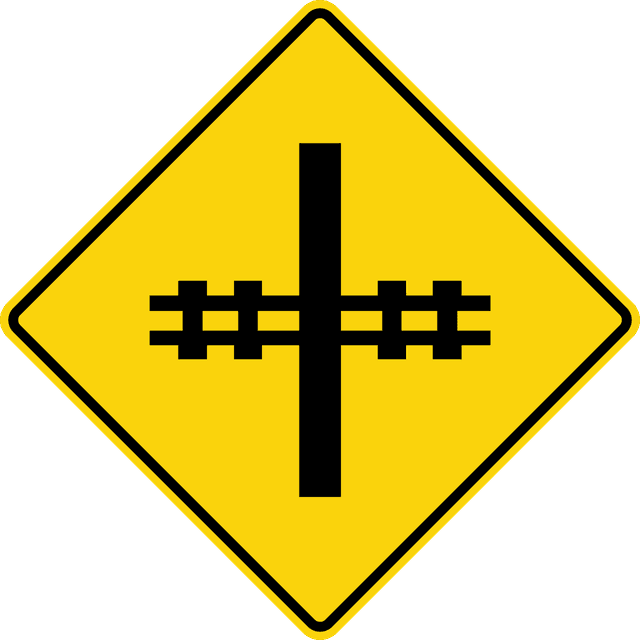
Railway Crossing Advance Warning Sign
A yellow circle with an X and 'RR' warns that a railway crossing is ahead — prepare to slow or stop.
Learn this sign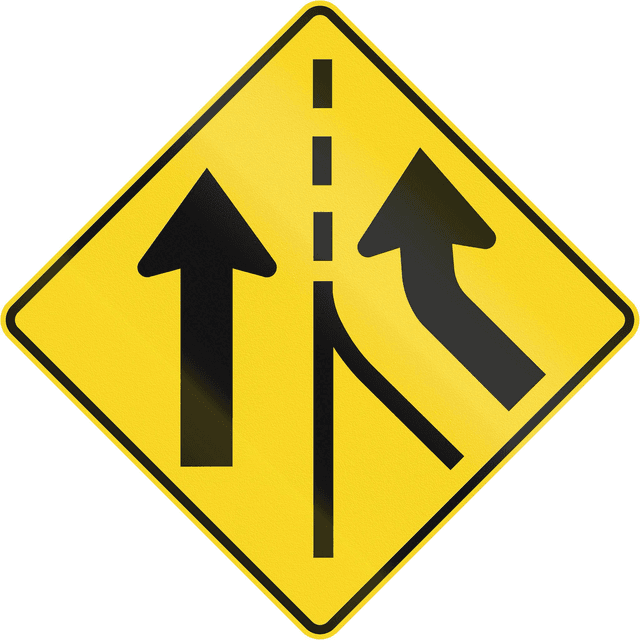
Merge Sign
Warns that two roadways join ahead — merging traffic must match speed and blend in safely.
Learn this sign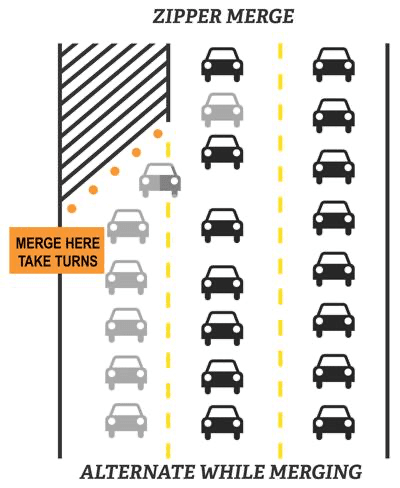
Lane Ends Sign
Warns that your lane is ending ahead and traffic must merge into the adjacent lane.
Learn this sign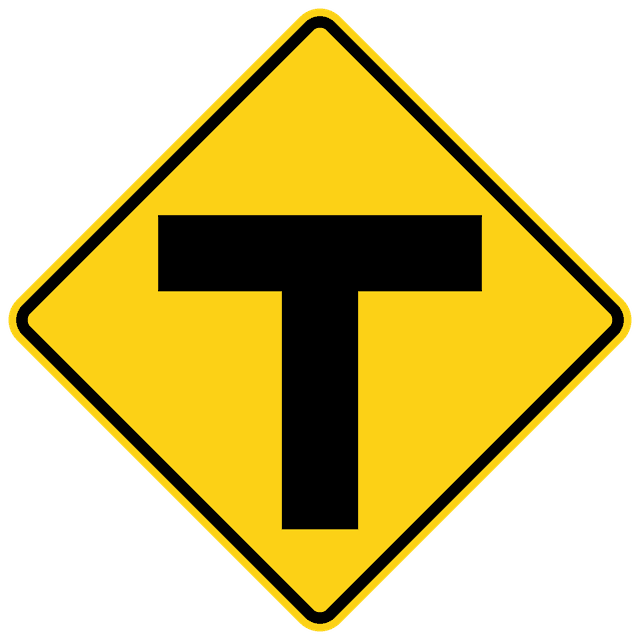
Road Ends / Sharp Turn Sign
Warns that the road ahead does not continue — you must turn in the direction indicated.
Learn this sign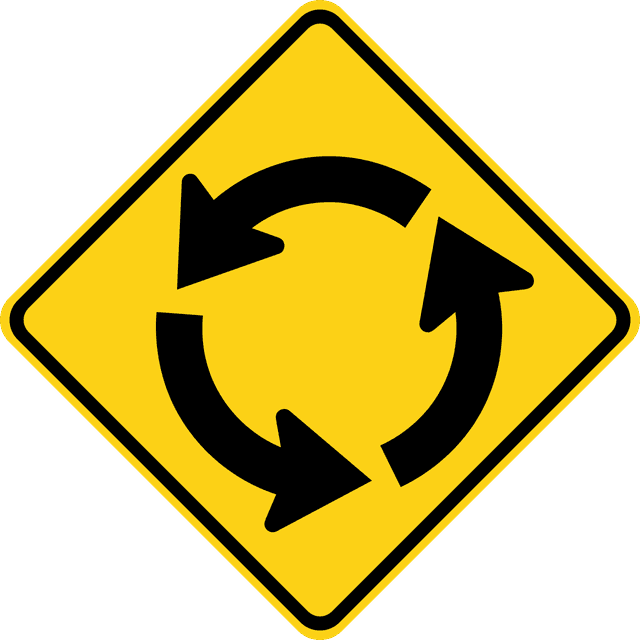
Roundabout Ahead Sign
Circular arrows warn that a roundabout is ahead — slow down and prepare to yield to traffic in the circle.
Learn this sign
Diamond Warning Signs Explained
Yellow diamond-shaped signs warn of hazards ahead — the shape and colour alone tell you to use caution.
Learn this sign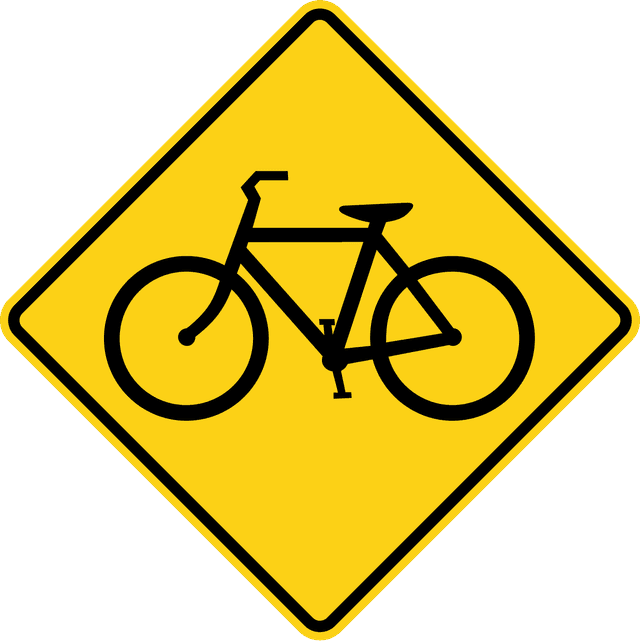
Bicycle Crossing Sign
Warns that a bike route or pathway crosses the road ahead — watch for cyclists entering the roadway.
Learn this sign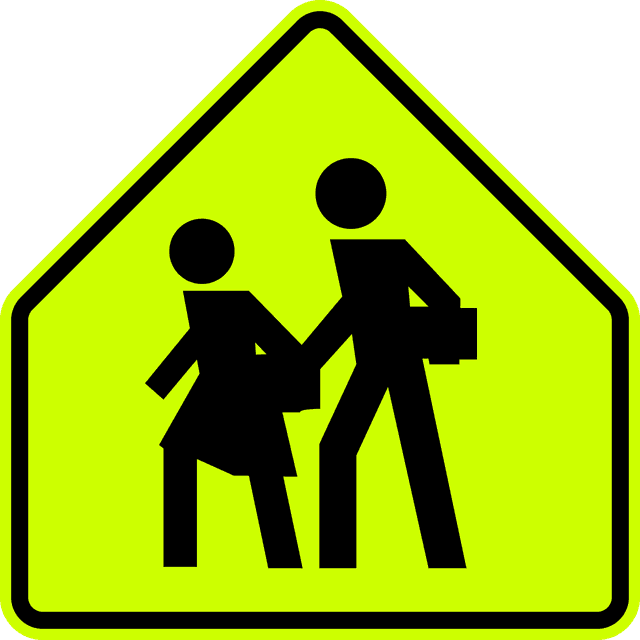
School Zone Sign
The five-sided (pentagon) sign with two figures marks a school zone — reduced speed limits apply when children are present.
Learn this signConstruction & Temporary Signs
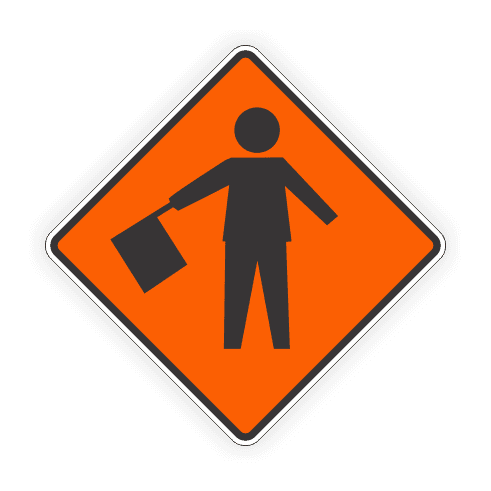
Orange signs mark construction and temporary conditions. Fines for speeding are doubled in work zones when workers are present.
Information & Guide Signs
Blue and green signs guide you to destinations, services, and facilities. They don't impose rules, but the knowledge test still asks about them.
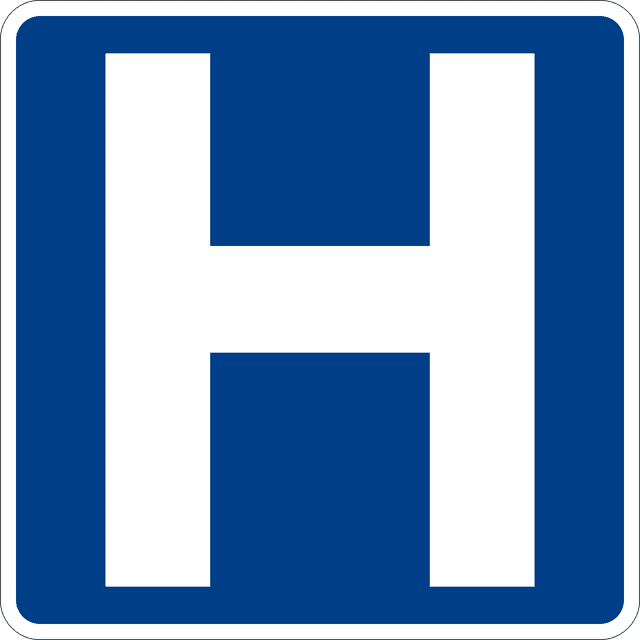
Hospital Sign
A white 'H' on a blue background guides drivers to the nearest hospital.
Learn this sign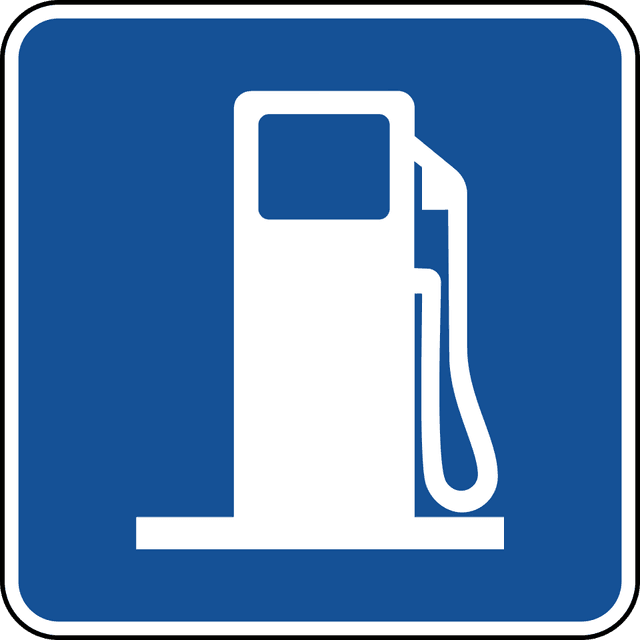
Gas Station Services Sign
A blue sign with a fuel pump symbol tells highway drivers where fuel is available at the next exit.
Learn this sign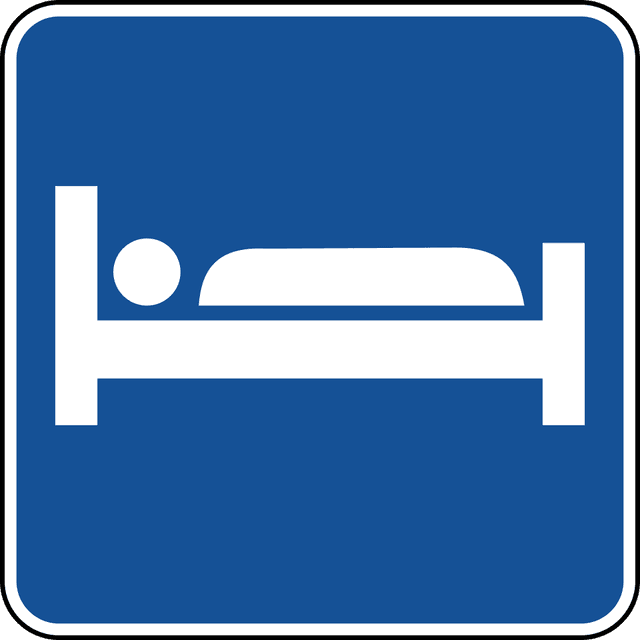
Accommodation Sign
A blue sign with a bed symbol indicates lodging is available off the next exit.
Learn this sign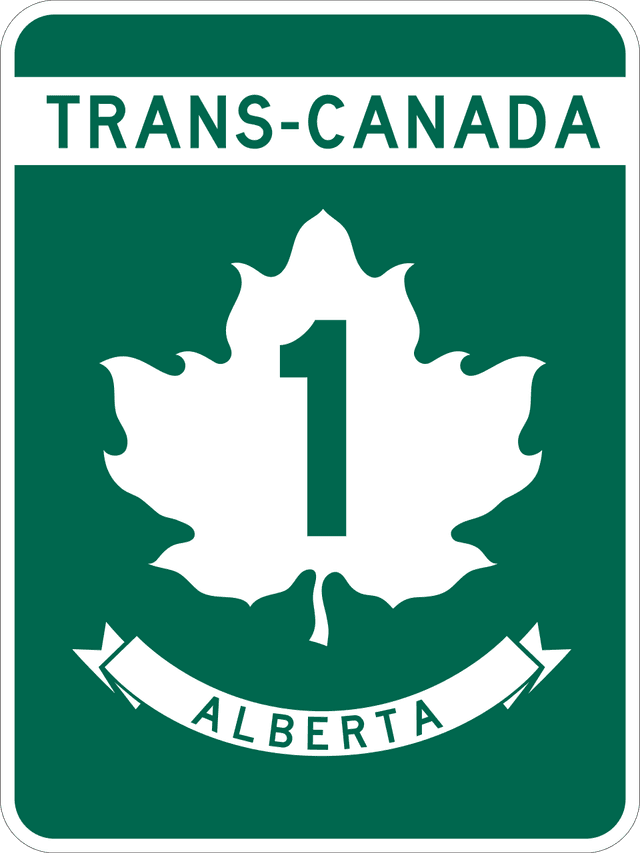
Trans-Canada Highway Shield
The green maple-leaf shield marks the route of the Trans-Canada Highway across Alberta.
Learn this sign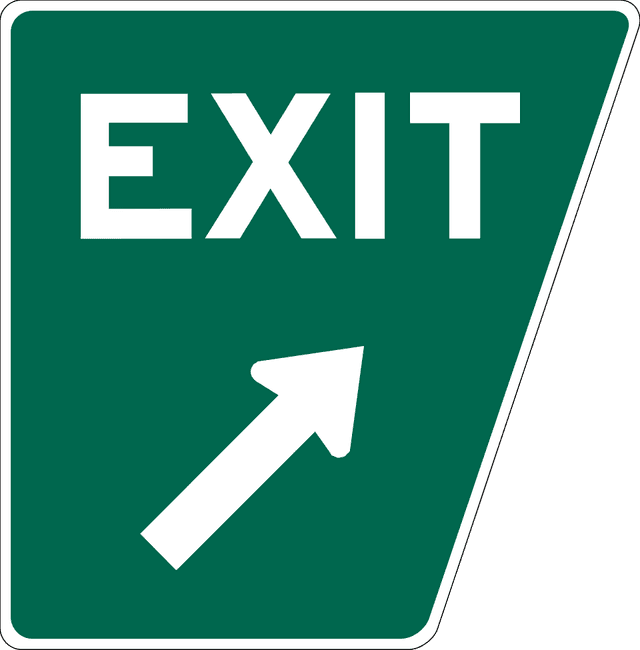
Exit Sign
Green exit signs tell you where to leave the highway and how far the exit is.
Learn this sign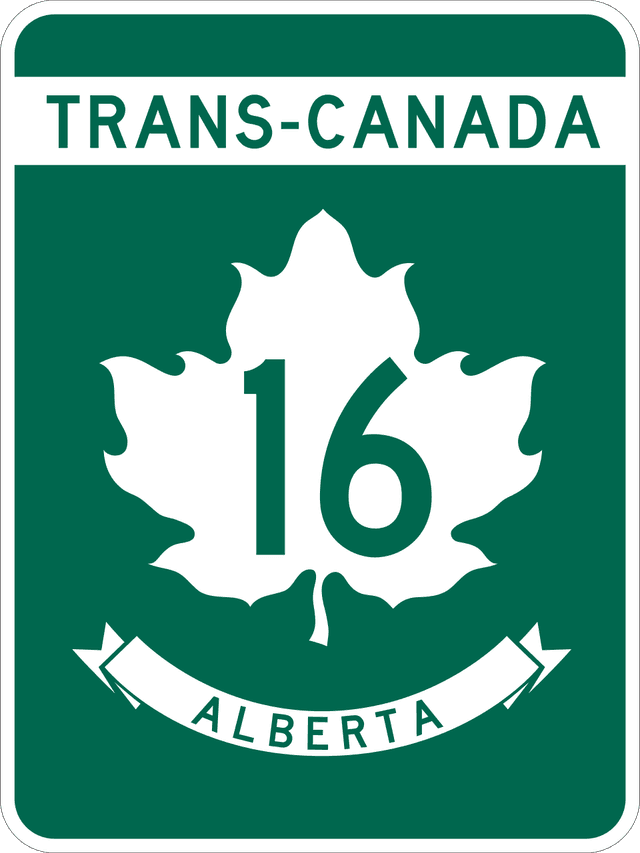
Distance Sign
Green signs listing upcoming towns and their distances in kilometres.
Learn this sign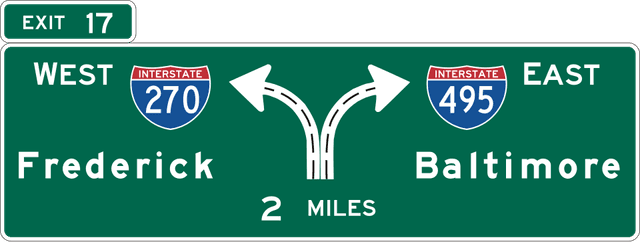
Destination Sign
Green directional signs with arrows pointing toward towns, routes, and major destinations.
Learn this signTraffic Signals
Traffic lights and arrows control intersections. Alberta has some unique signals — like the flashing green light — that trip up many test takers.
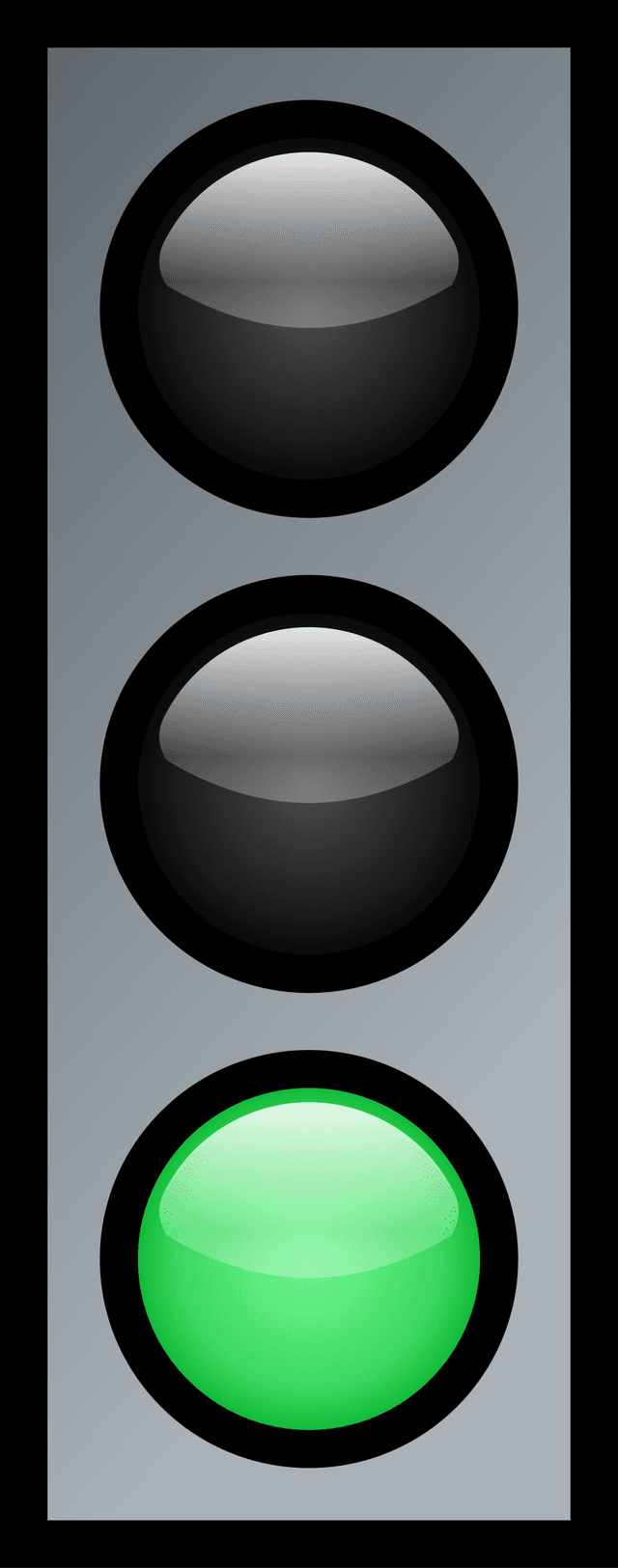
Solid Green Light
Proceed through the intersection — but only after yielding to pedestrians and vehicles already in it.
Learn this sign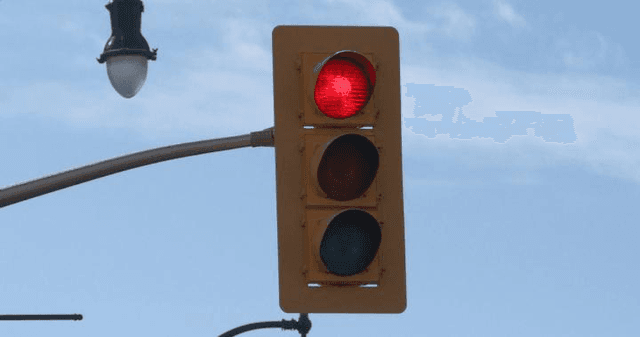
Solid Red Light
Come to a complete stop at the stop line and wait for green — right turns permitted after stopping unless signed otherwise.
Learn this sign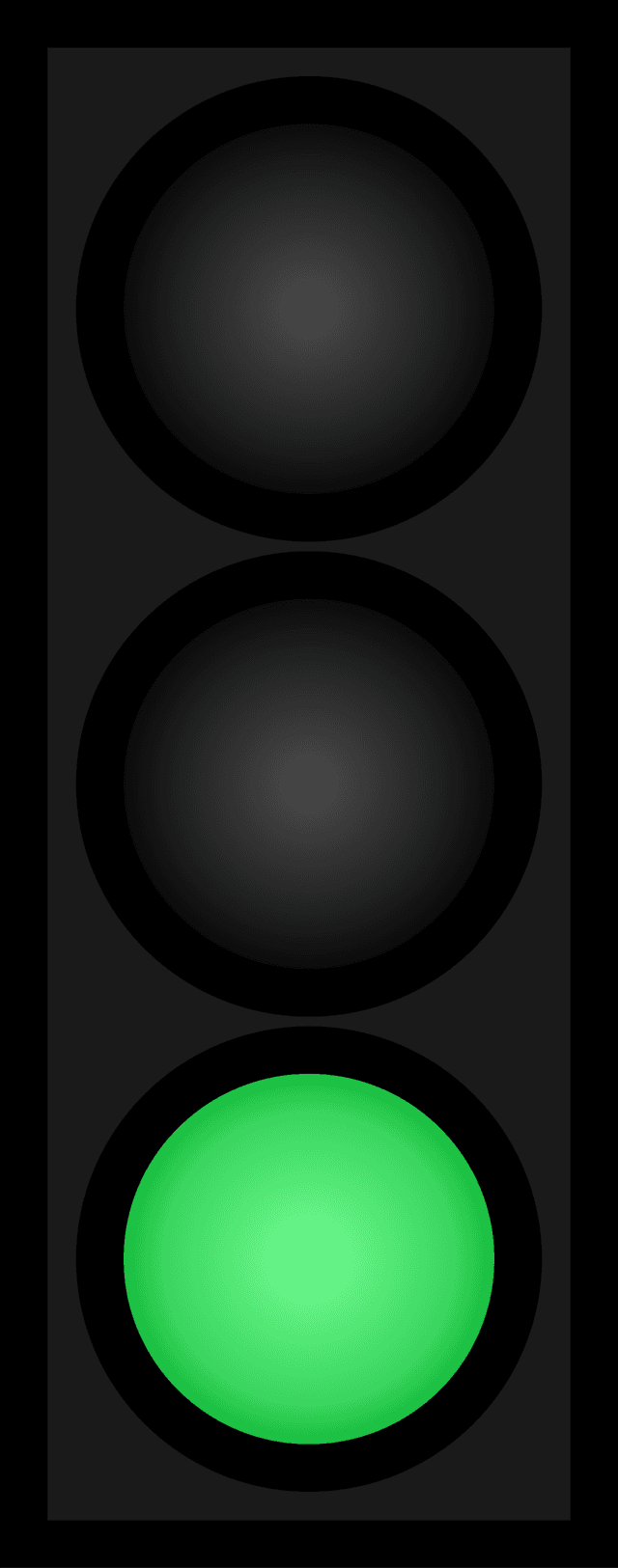
Flashing Green Light
In Alberta, a flashing green means a pedestrian-controlled signal — proceed, but be ready to stop if a pedestrian activates it.
Learn this sign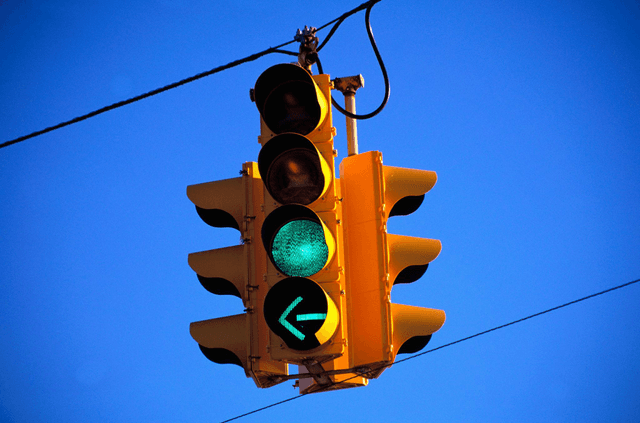
Green Arrow Signal
A green arrow gives you a protected turn in the direction shown — oncoming traffic is stopped.
Learn this sign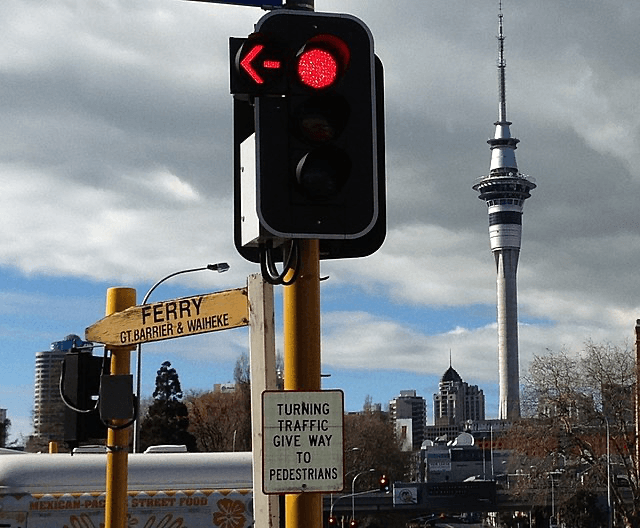
Red Arrow Signal
A red arrow prohibits movement in the direction shown until it changes.
Learn this sign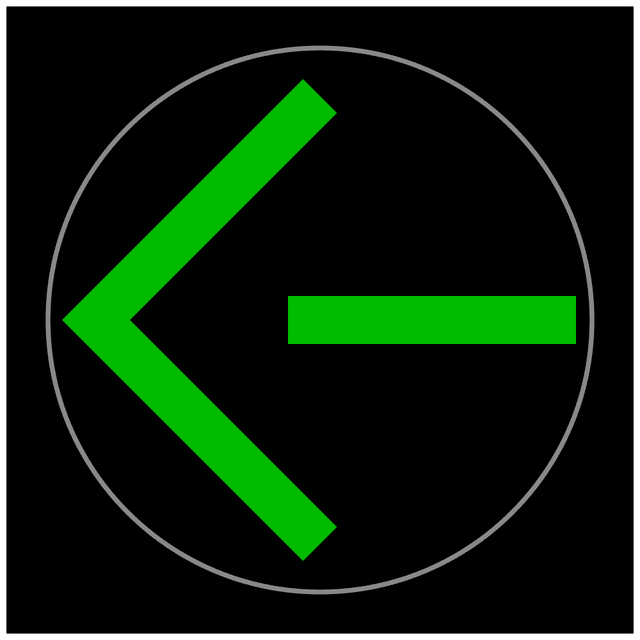
Left Turn Arrow to Green Sequence
When a green left arrow ends and the light turns solid green, you may still turn left — but you must now yield to oncoming traffic.
Learn this sign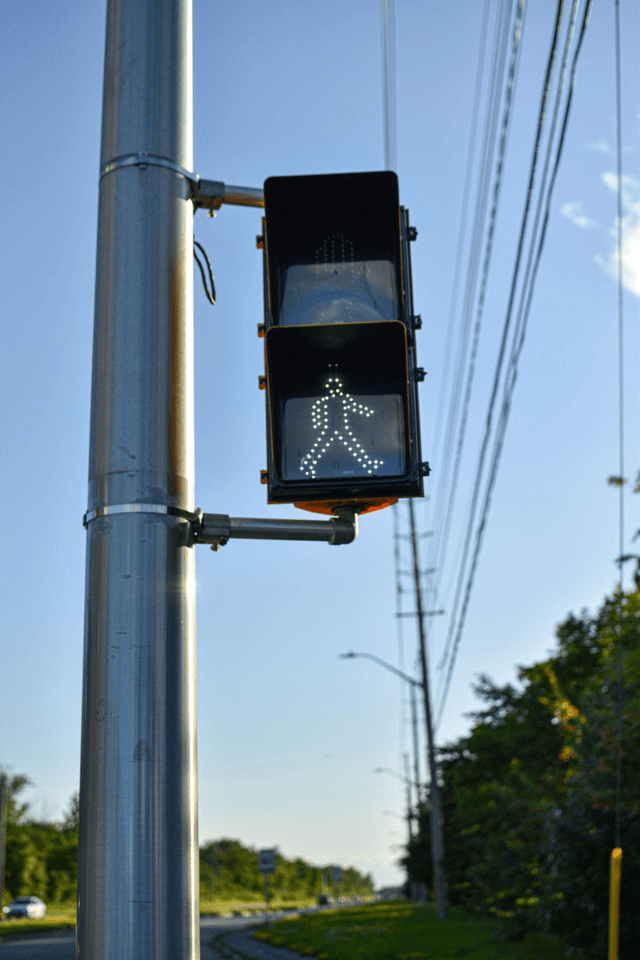
Pedestrian Walk Signal
The white walking figure tells pedestrians they may cross; the flashing orange hand means don't start crossing.
Learn this sign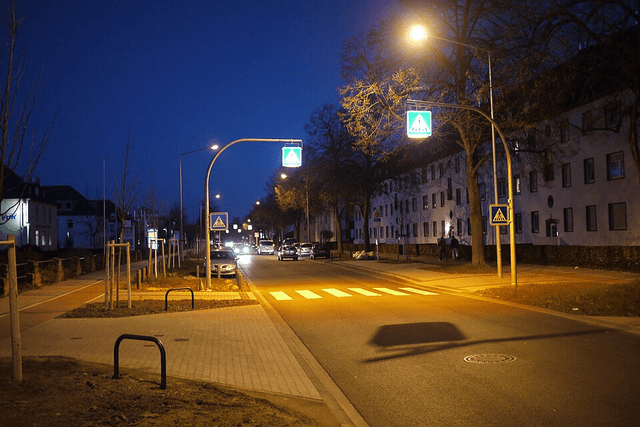
Flashing Crosswalk Lights
Overhead or roadside amber lights flash when a pedestrian activates the crosswalk — you must stop and yield.
Learn this signPavement Markings
Lines and arrows painted on the road tell you where you can pass, change lanes, stop, and park. Yellow separates opposing traffic; white separates traffic moving in the same direction.
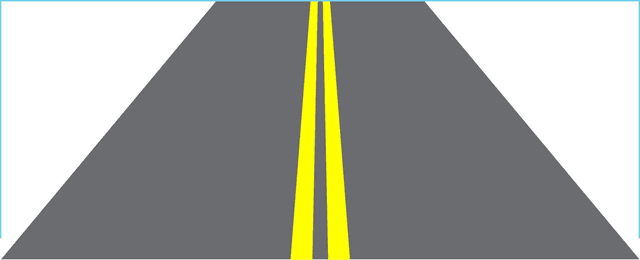
Yellow Centre Line
Yellow lines separate traffic moving in opposite directions — solid means no passing, broken means passing allowed.
Learn this sign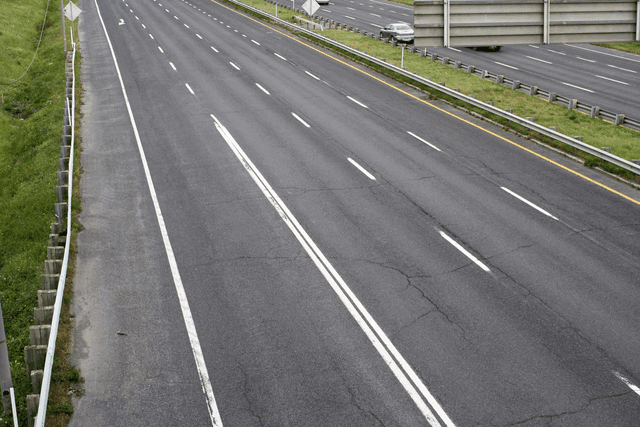
Double White Line
Two solid white lines between lanes mean lane changes are prohibited — stay in your lane.
Learn this sign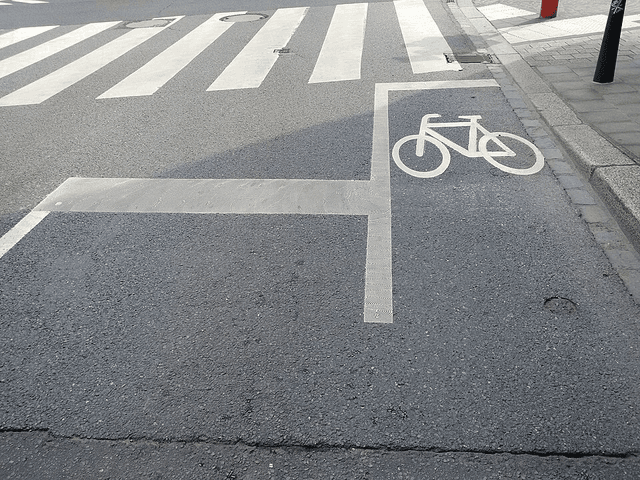
Stop Line
The wide white line across your lane shows exactly where to stop at a sign or signal.
Learn this sign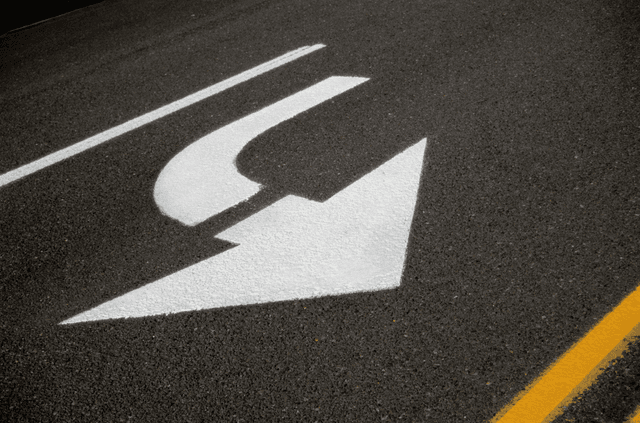
Turn Arrow Pavement Marking
White arrows painted in a lane show the only movements allowed from that lane.
Learn this sign
Shared Centre Turn Lane
The centre lane marked with yellow lines and opposing arrows is for left turns by traffic from BOTH directions.
Learn this sign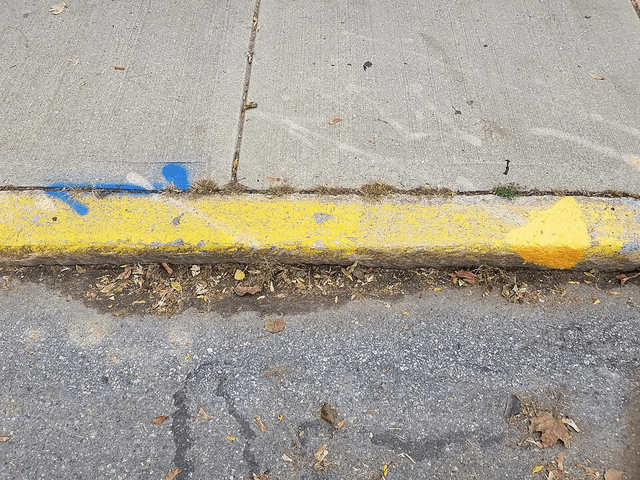
Yellow Curb Marking
A yellow-painted curb means stopping or parking is prohibited in that space.
Learn this signThink You Know Your Signs?
Road signs make up a big part of the Alberta knowledge test. Put your knowledge to the test with free practice questions — no signup required to start.